75 Days of Keeping the Promise
I finished 75 Hard on June 14.
I started on April 1 with a simple reason: I turn 40 at the end of November 2025, and I wanted to see how far I could push myself before then. I wanted to get into the best shape of my life, physically and mentally, and I wanted to do it honestly. No skipped details, no technicalities, no “close enough.”
For 75 straight days, I followed the rules exactly: two separate 45-minute workouts every day, one of them outside no matter the weather, 3.8 liters of still water, 10 pages of non-fiction, a progress photo, a strict diet, no cheat meals, no junk food, no processed foods, and no alcohol. If I had broken one rule, I would have had to restart from day one.
I never restarted, because I never missed a day.
What the rules changed
The biggest surprise was how much the non-negotiable structure simplified everything.
Once the rules were set, there was less internal discussion. Less bargaining, less mental noise, less decision fatigue. I was not asking myself whether I felt like training or whether one small exception would really matter. The answer was already decided.
At the beginning, that felt strict. Later, it felt clean.
Motivation came and went, exactly as expected. Some days I felt sharp and driven. Some days I felt flat and tired. That part was useful. It made one thing very clear: when motivation fades, discipline has to take over. If you wait to feel ready every day, you build nothing consistent.
Somewhere along the way, the challenge stopped feeling like a project and started feeling like part of who I was. I was no longer trying to become someone disciplined. I was behaving like someone disciplined, every day, long enough for it to feel normal.
What my body taught me
Physically, the challenge gave me more than I expected.
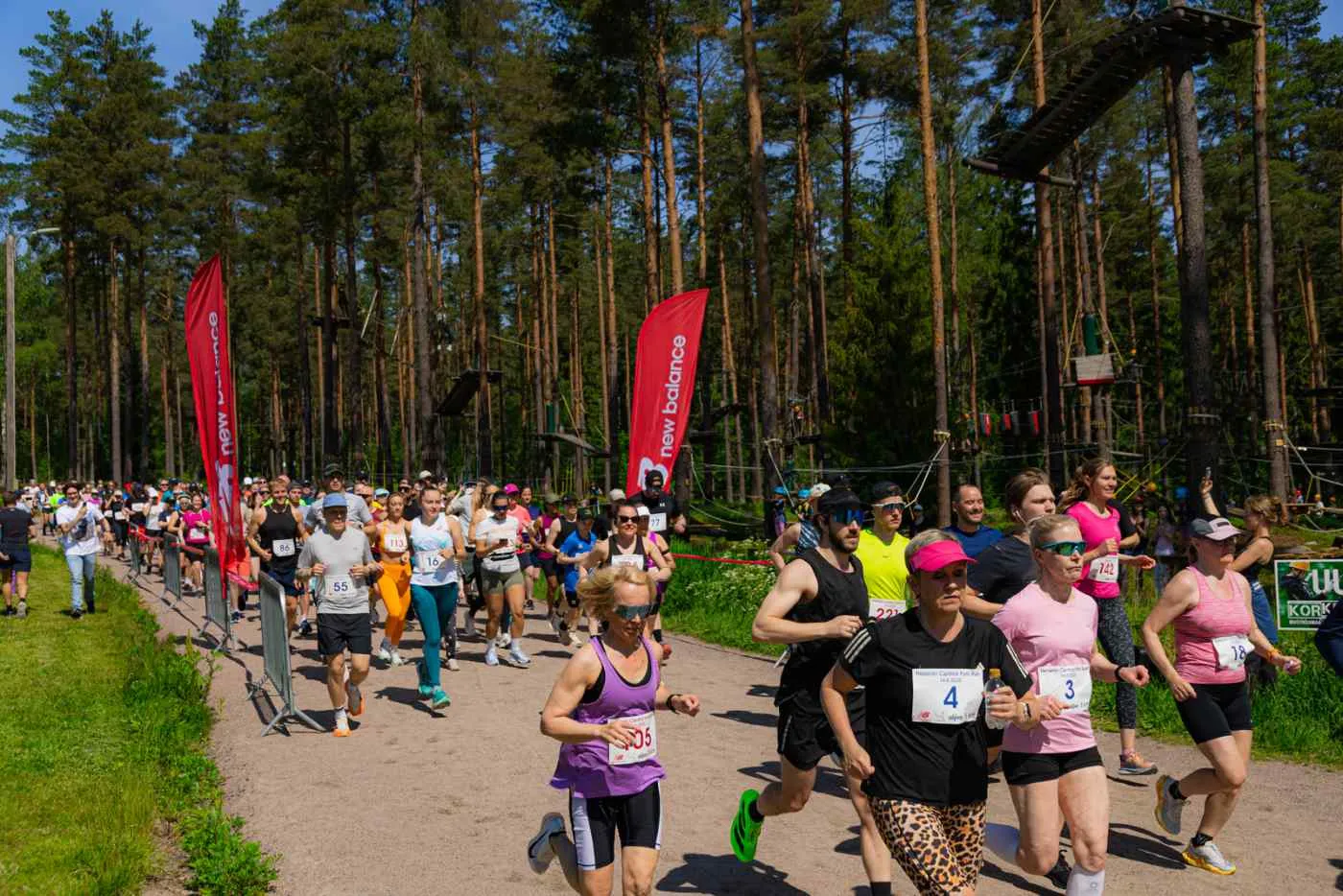
I ran on all 75 days. That came to 611.49 kilometers in 65 hours and 30 minutes, with an average of 8.15 kilometers per day. I also did 37 rowing sessions for 359.5 kilometers and 38 full-body strength workouts. Altogether, I trained for 142.5 hours, or about 1 hour and 54 minutes per day.
The numbers matter to me mostly because of what they represent. I ran three half marathons, set consistent new personal bests, and learned that my body is capable of more than I had assumed. My longest run was 23 kilometers. My fastest run was 10.11 kilometers in 46:27.
The body composition changes made that visible. My weight went from 71.6 to 70.2 kilos, but more importantly, muscle mass increased from 33.4 to 35.9 kilos while body fat dropped from 16.4% to 10.0%.
Still, I do not want to pretend the whole experience was clean and effortless, because it was not.
The part that was not sustainable
One of the most important things I learned is that a plan can work and still ask too much from your nervous system.
By the end, I felt stronger, leaner, and mentally tougher. But I also noticed that my system was under constant stress. Training every single day without any real off switch creates a background tension that builds slowly.
The water target was part of that problem for me. Drinking 3.8 liters every day negatively affected my sleep, especially when it pushed hydration too late into the evening. That led to one of the clearest lessons of the entire challenge: sleep is not a side detail. It is one of the main pillars of wellbeing.
That honesty matters to me because I do not want to come out of this pretending that more is always better. Sometimes more is just more.
What I am taking with me
Even with that caveat, the challenge changed how I see myself.
Before this, I knew I could be consistent for a while. Now I know I can commit fully to something difficult and carry it all the way through without looking for exits. That is a different kind of confidence. Quieter, but more useful.
It also gave me proof that if I truly commit to a habit or a life change, I can build it. Not because I am unusually motivated, but because I am willing to follow through after the interesting part is over.
The reading mattered too. During the challenge I worked through books like Dopamine Nation, Awareness, How to Focus, The Almanack of Naval Ravikant, and about 40% of Atomic Habits. They landed differently because I was not just reading about behavior in theory. I was testing it in real life, every day.
What comes next
I do not want to keep living in 75 Hard mode. I want to keep the benefits and drop the parts that do not make sense long term.
So the next phase is a more sustainable plan: five strength workouts and three runs per week, still eating clean, still keeping protein high, still improving body composition, but with more room for recovery.
And next year, I want to run the Helsinki Marathon in May 2026.
On the day I finished, my reward was very simple: a cold Coke Zero, junk food for dinner, and an easy run that, for the first time in 75 days, was allowed to be under 45 minutes.
That felt earned.
Not because the challenge made me extreme, but because it reminded me that keeping a promise to yourself, over and over again, changes something fundamental. It did for me.