



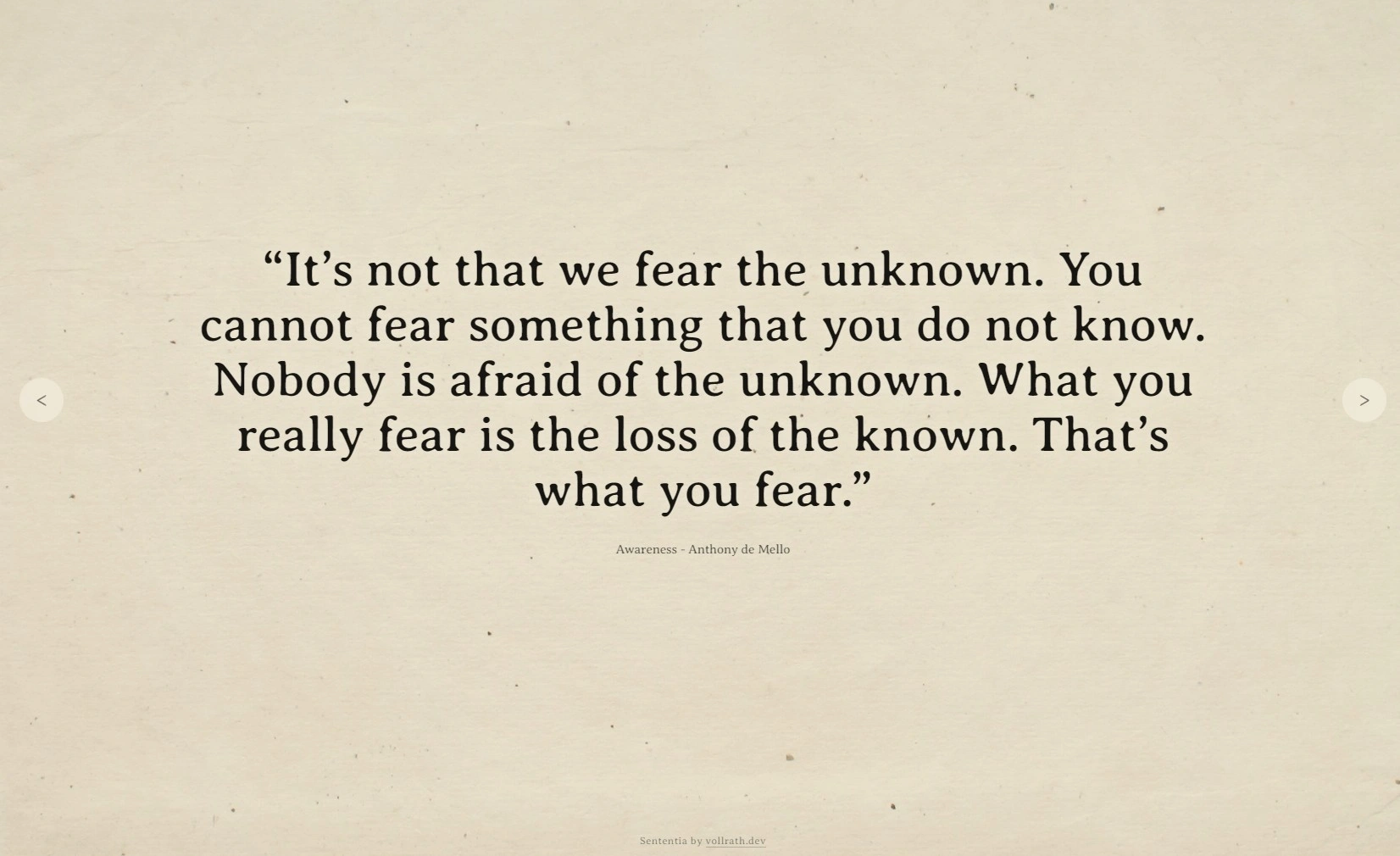
Sententia is a full-screen quote browser for reading highlights exported from the Supernote Nomad. The Supernote is great for deep reading, but browsing through hundreds of saved passages on an e-ink display is slow when you’re looking for something specific or just want to stumble across something useful.
What it does
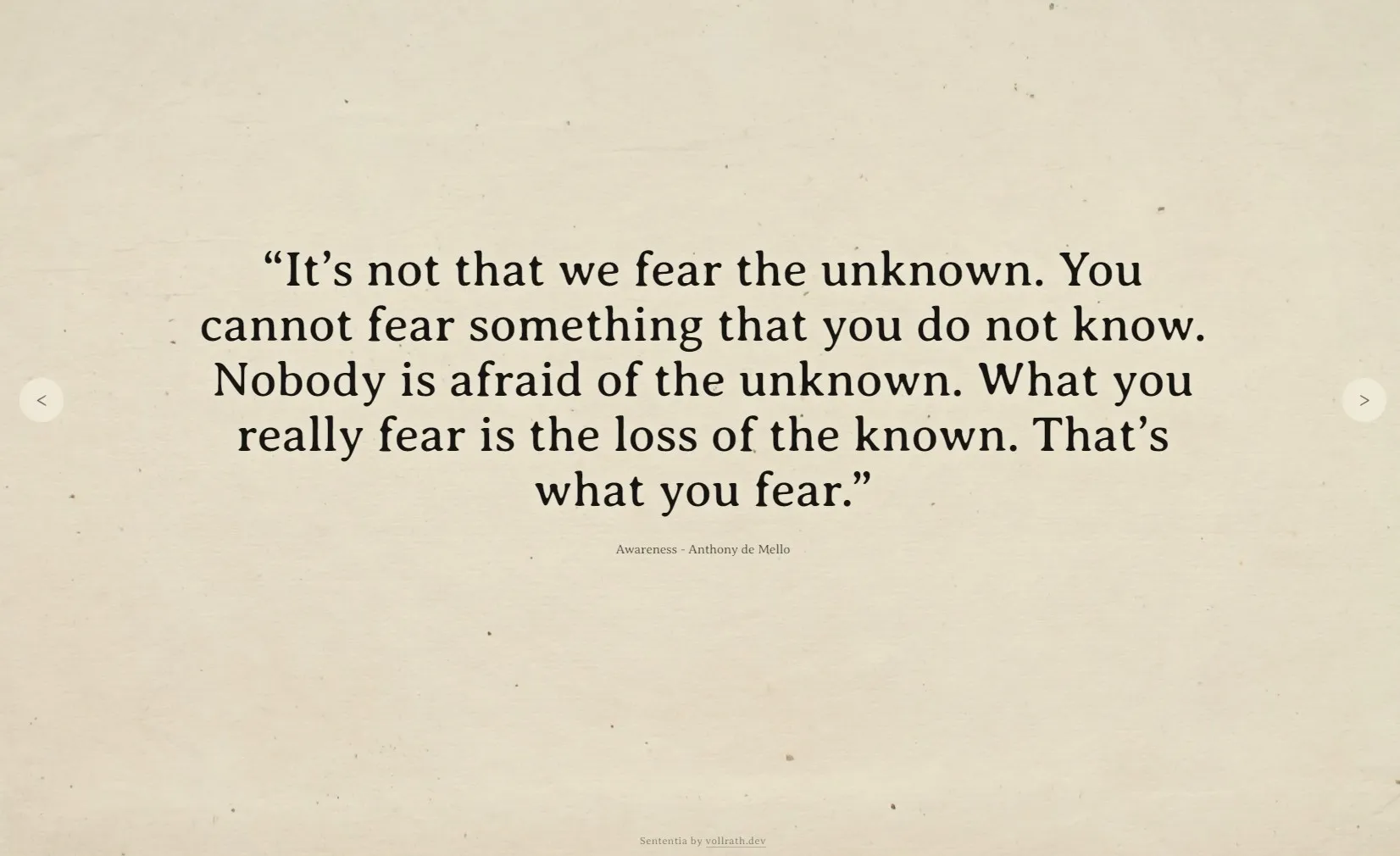
You export highlights from the device, drop them in, and browse. Individual quotes show up in a clean typographic layout — no dashboard, no tagging system, no organisation overhead. The interaction is close to passive: move through saved passages without deciding whether you’re “managing your knowledge.”
The display is intentionally minimal. Quotes need typography, spacing, and enough controls to browse. They don’t need a productivity layer around them.
The technical shape
Express and cors handle the small server side for parsing and normalization. React and Vite handle the frontend. TypeScript keeps quote shapes explicit so the parser and the display stay in agreement.
The narrow Supernote support is intentional. Generalizing too early would mostly mean collecting edge cases for devices I don’t use.
Where it stands
The main fragility is the export format — if Supernote changes it, the parser changes too. If I rebuilt it I’d make the import format more explicit and keep fixture files around for testing. For now the boundedness is what keeps it pleasant to use.