
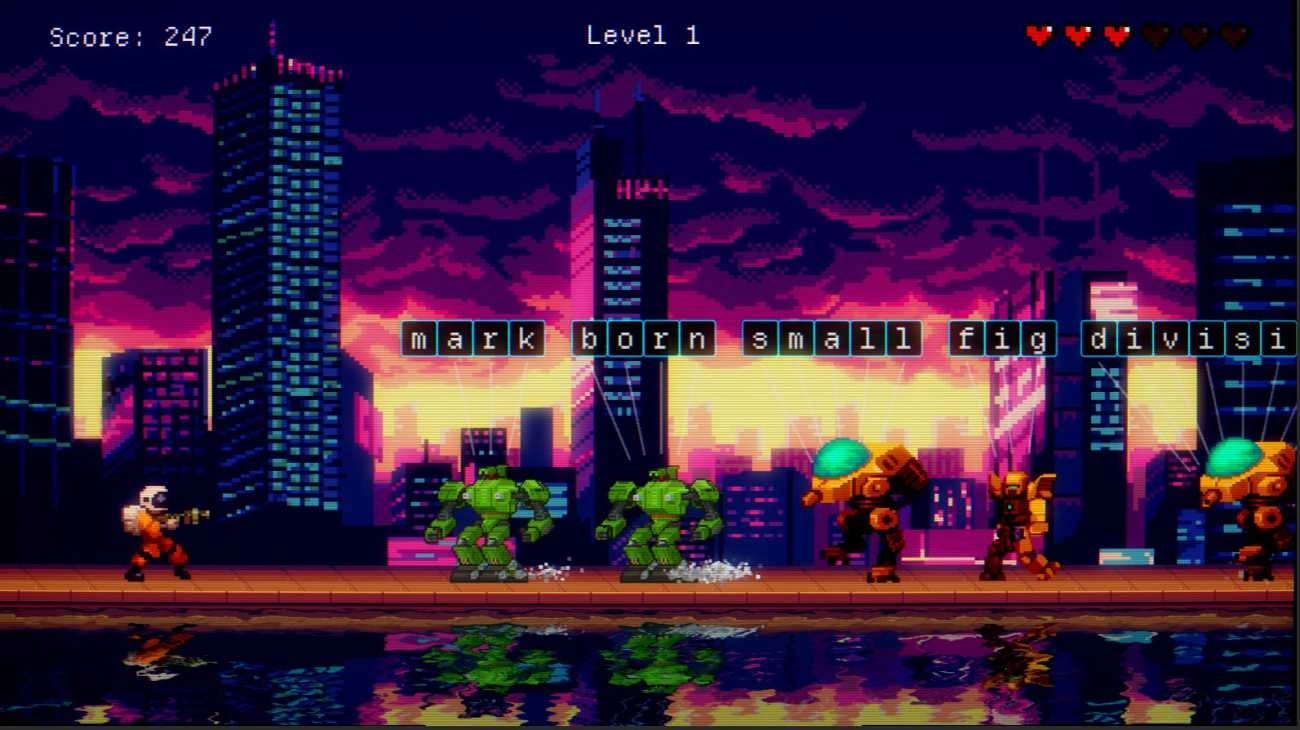
HyperType is a typing game where words sit above incoming enemies. Type a word, shoot the enemy. Type slowly, get overrun. It is typing practice with a bit more pressure than a speed test.
The mechanic
Most typing tools give you a paragraph and a score. Here, the input is the game. Enemies spawn with words, you type them to fire, and waves get faster. That is the whole loop.
I kept the visuals high contrast and uncluttered so the words are easy to read when the screen gets busy.
Why Godot
I used Godot because it is a much better fit for input timing, enemy state, animation, and browser export than trying to force a web framework into being a game engine.
The difficult part was making input feel immediate. A typing game falls apart if the prompt is hard to read, feedback lands late, or restarting takes too long. Those boring details made more difference than the enemy art.
Stack
Godot for the game and a browser export for sharing it.
Where it stands
It is playable and the core idea works. I would spend another pass on progression and difficulty; that is what stops a small arcade game becoming repetitive.