






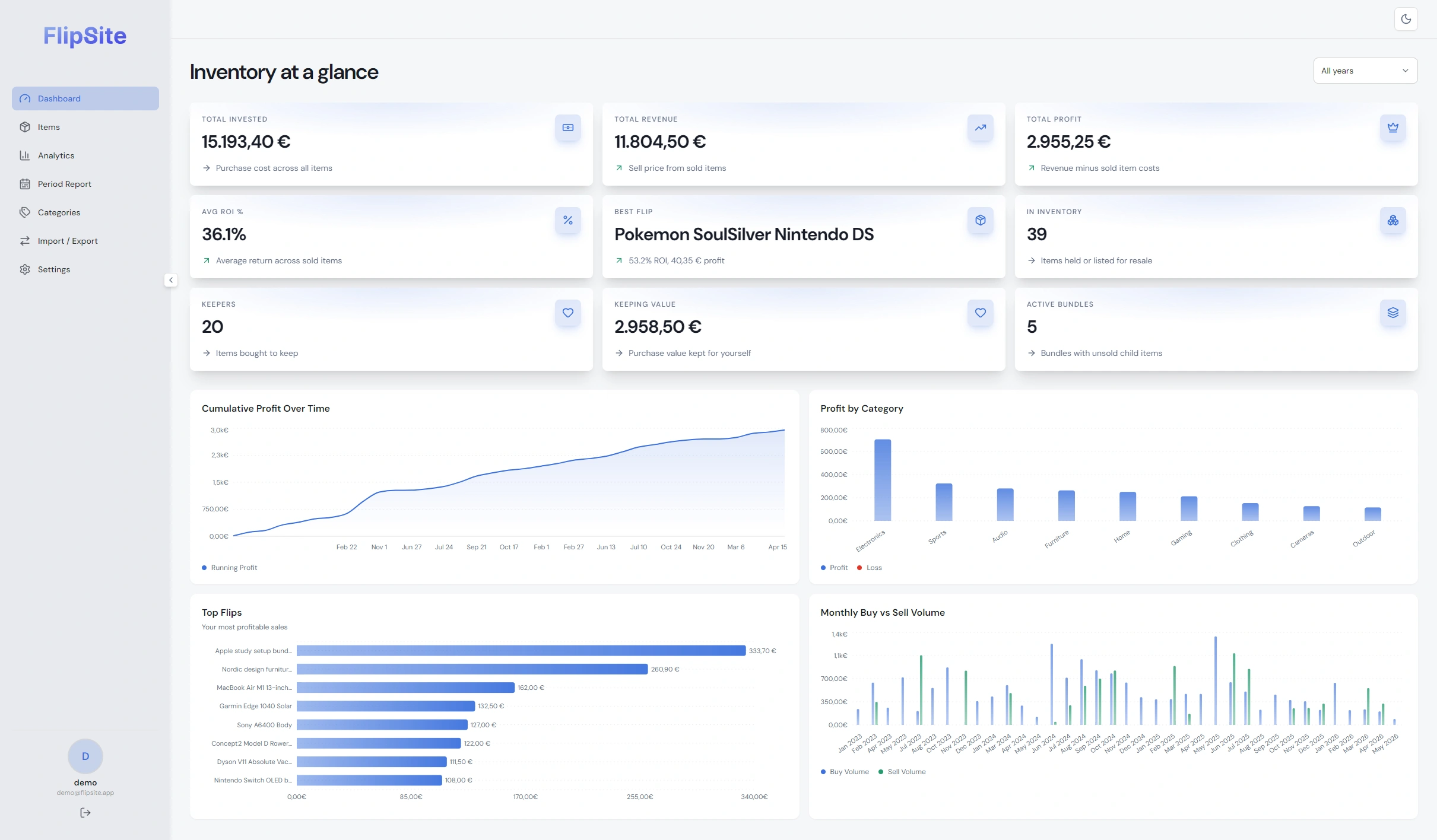
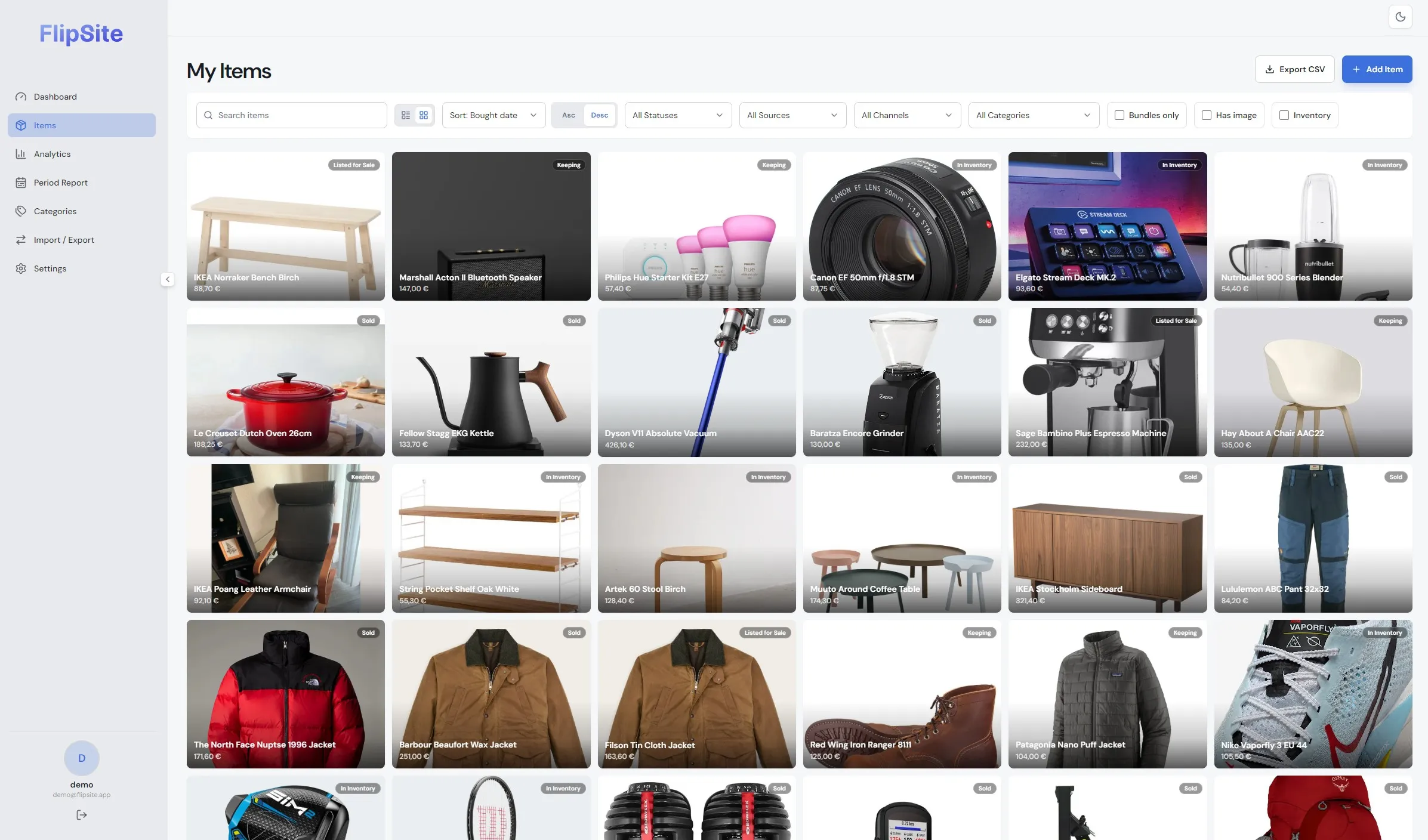
FlipSite is a resale inventory tracker I built after my spreadsheet became too annoying to maintain. Adding an item was fine. Keeping photos, receipts, sale status, and split costs connected months later was not.
The bundle math problem
The main problem was bundles. If I buy a camera kit and sell the body, lens, and accessories separately, each part needs its own status and sale price while sharing the original cost. That is possible in a spreadsheet, until one edit breaks the maths somewhere else.
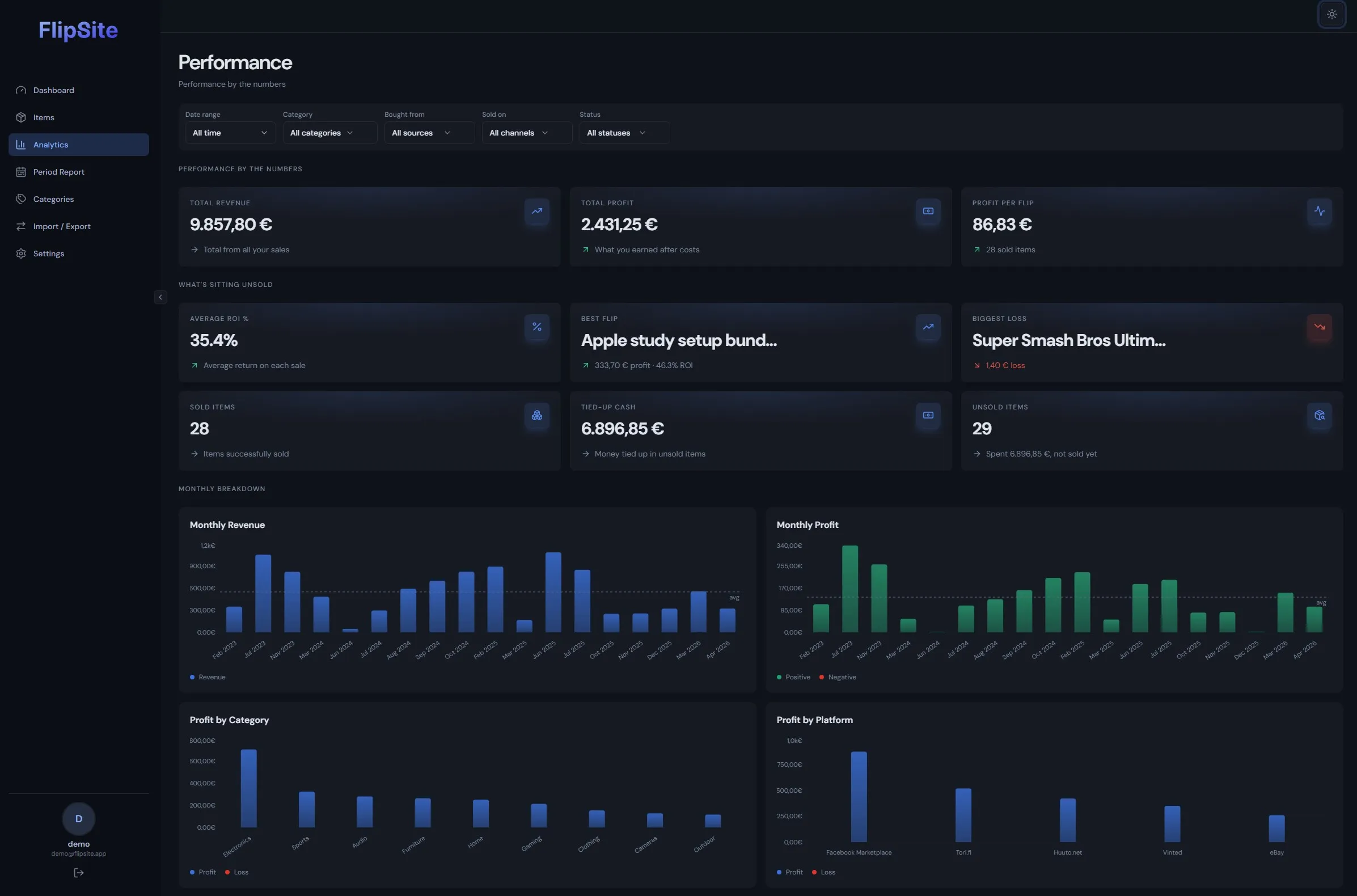
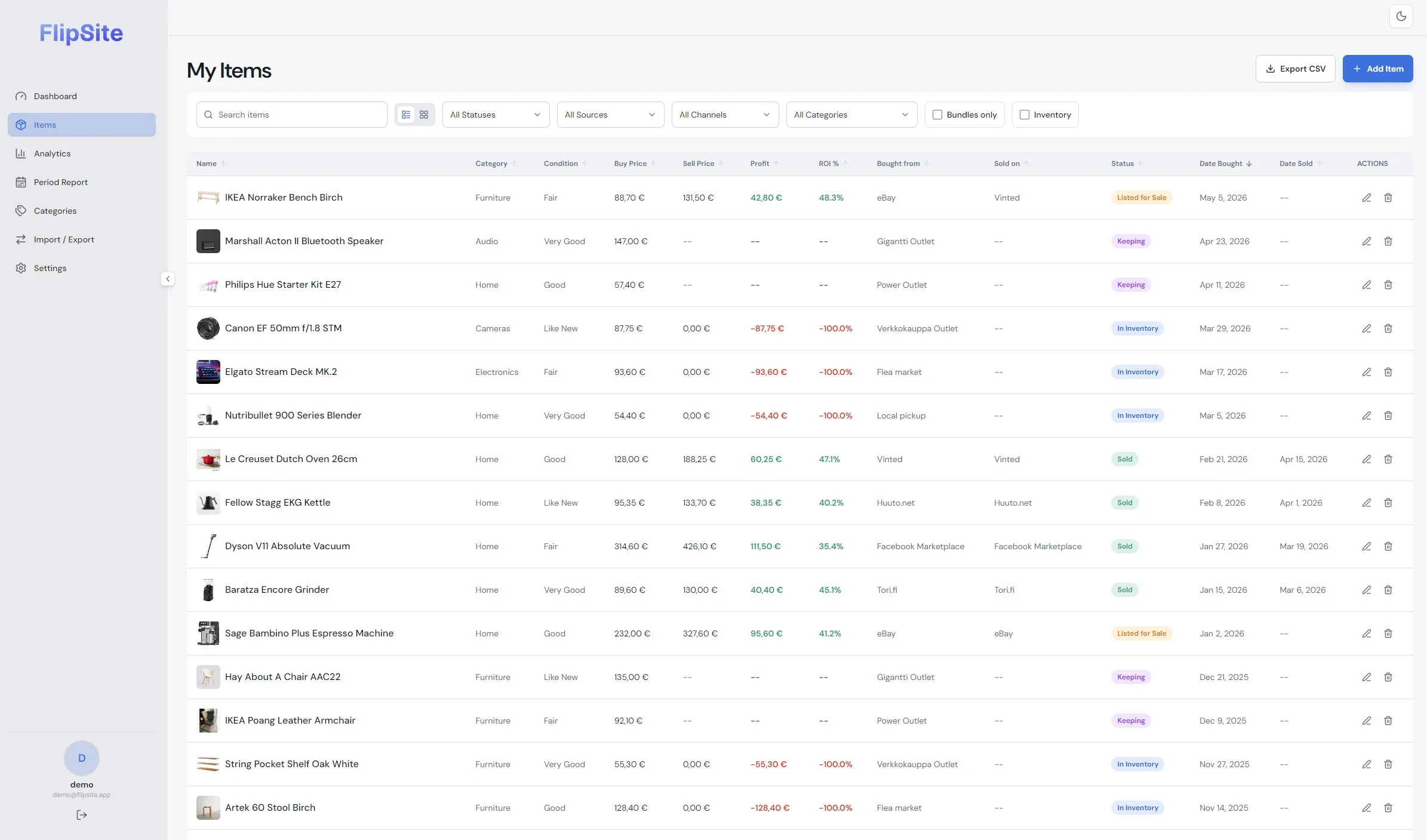
The rest is straightforward: add photos, prices, platform, and condition; attach receipts; mark items as holding, listed, sold, or keeping; then look at profit, ROI, and how long things have been sitting around.
Under the hood
Supabase handles auth, Postgres, storage, and row-level security. TanStack Query manages server state, while Recharts draws the analytics.
Stack
Frontend is React, TypeScript, Vite, and Tailwind CSS. The data layer is Supabase. I used Radix-style primitives, lucide-react, sonner, and a little GSAP on the landing page.
Where it stands
It replaced my spreadsheet, so it did its job. If I revisit it, I would move more analytics into the database and sort out import and export sooner. It is deliberately personal, not a marketplace or a reselling SaaS.